

15 Healing Room Ideas for a Calming Sanctuary at Home
To create your healing room, start by choosing a peaceful location and utilizing natural light to brighten the space. Incorporate calming colors and add plants for a touch of nature. Design a cozy reading nook with soft textiles, and embrace minimalist decor to promote tranquility. Establish a personal altar or focus point for mindfulness practices. Journals can enhance emotional clarity, while soft lighting sets a soothing atmosphere. Explore these ideas further to craft your perfect sanctuary.
Choose the Right Location

When you’re creating a healing room, choosing the right location is essential, as this space will serve as your personal sanctuary. Consider a spot that offers peace and quiet; ideally, it’s away from high-traffic areas in your home. If possible, look into outdoor healing options; a garden or patio can provide a revitalizing atmosphere. This’ll not only enhance your peace but also connect you with nature. If you need a multi-purpose space, think about a corner in a larger room where you can set up your healing area. Use portable furniture and decor so you can easily transform the space as needed, ensuring it serves your healing journey while remaining versatile for other activities you enjoy.
Utilize Natural Light
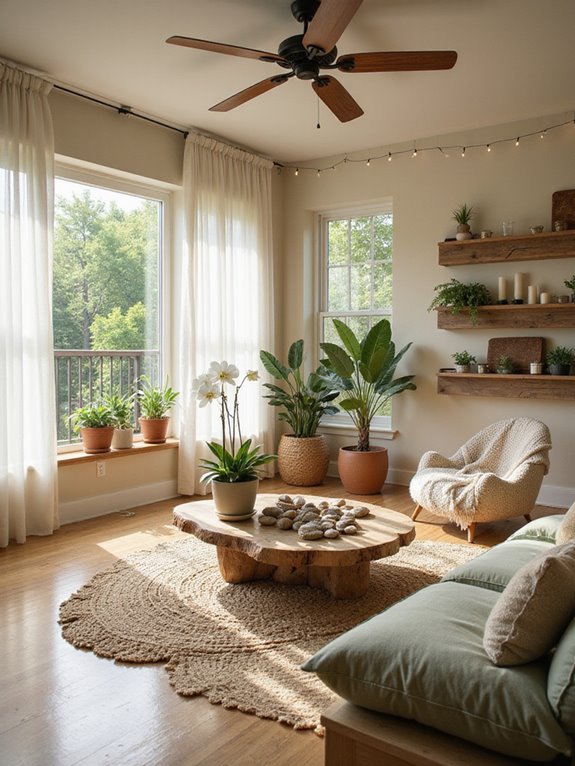
Utilizing natural light in your healing room can dramatically enhance the space’s calming atmosphere, so it’s worth considering how you can maximize this essential resource. First, position your healing room where it can receive ample sunlight throughout the day, whether it’s a corner or a specific wall. Next, choose light sources that complement the natural light, like soft, warm lamps for evenings. Consider your window treatments; sheer curtains or blinds can filter harsh sunlight while allowing gentle rays to enter. This balance creates a tranquil space where you can unwind. To enhance the effects, keep the area around windows clean and unobstructed. Integrating nature through visible greenery can further elevate this inviting ambiance.
Incorporate Calming Colors
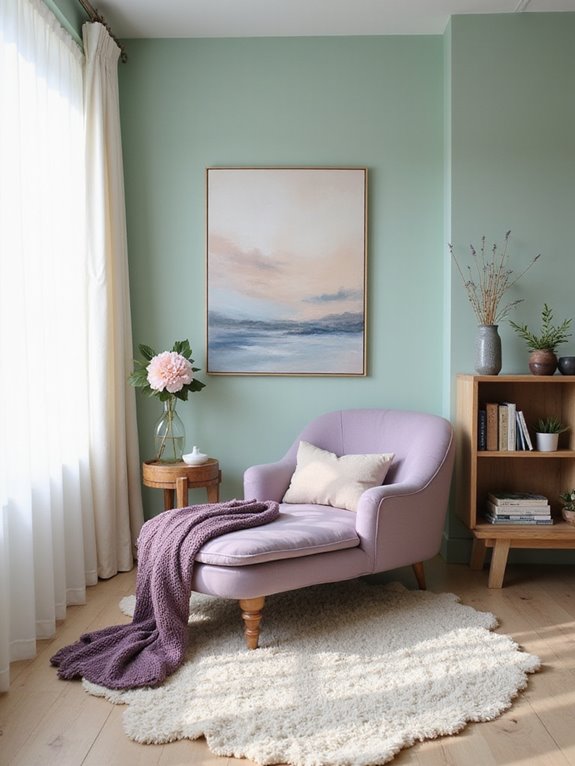
To create a soothing atmosphere in your healing room, the colors you choose can play a significant role in influencing your mood and overall sense of calm. Research in color psychology shows that certain hues can evoke relaxation and serenity, making it essential to select soothing palettes. Soft blues and greens are excellent options, as they mirror nature and promote tranquility. Consider painting the walls in these colors or incorporating them through decor like cushions and artwork. Additionally, warm neutrals can provide a comforting backdrop, while gentle pastels can add a touch of warmth without overwhelming the senses. By thoughtfully selecting your color scheme, you can transform your space into a haven that nurtures peace and relaxation.
Add Plants and Greenery
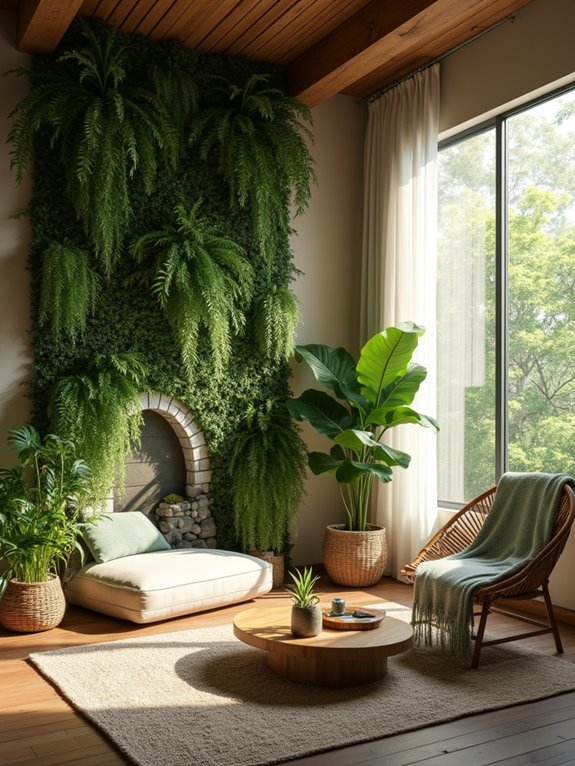
Adding plants and greenery can greatly enhance the calming atmosphere of your healing room, as they bring a touch of nature indoors and promote a sense of well-being. Consider creating a small herb garden; it’s not only visually appealing but can also provide fresh scents and natural remedies. Plants like basil, lavender, and mint are excellent choices for both beauty and utility. Don’t overlook indoor trees, which can create a serene ambiance. Options such as ficus or bamboo palm add height and depth to your space. Make sure you position them in well-lit areas and rotate them occasionally for even growth. By incorporating these natural elements, you’ll foster a peaceful environment that invites relaxation and rejuvenation.
Create a Cozy Reading Nook
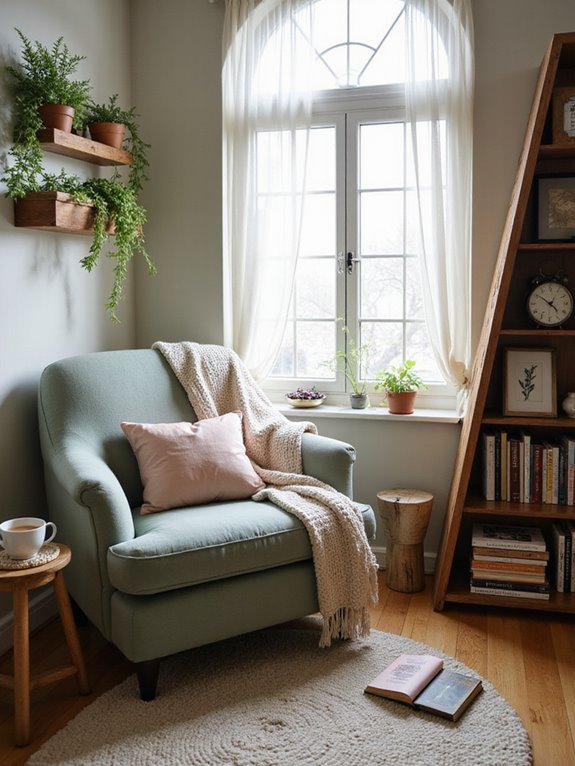
Creating a cozy reading nook can transform a corner of your healing room into a personal sanctuary where you can escape into the pages of a good book. Start by selecting comfortable seating, like a plush chair or a bean bag, that invites you to sink in and relax. Adding cozy blankets can bring warmth and a touch of comfort, ensuring you feel snug during those long reading sessions. Consider placing a small shelf nearby to keep your favorite novels within reach, and add soft lighting, such as a reading lamp or fairy lights, to create a welcoming atmosphere. With soft textures and inviting decor, you’ll have the perfect retreat to unwind, explore new worlds, and rejuvenate your spirit.
Design a Meditation Space
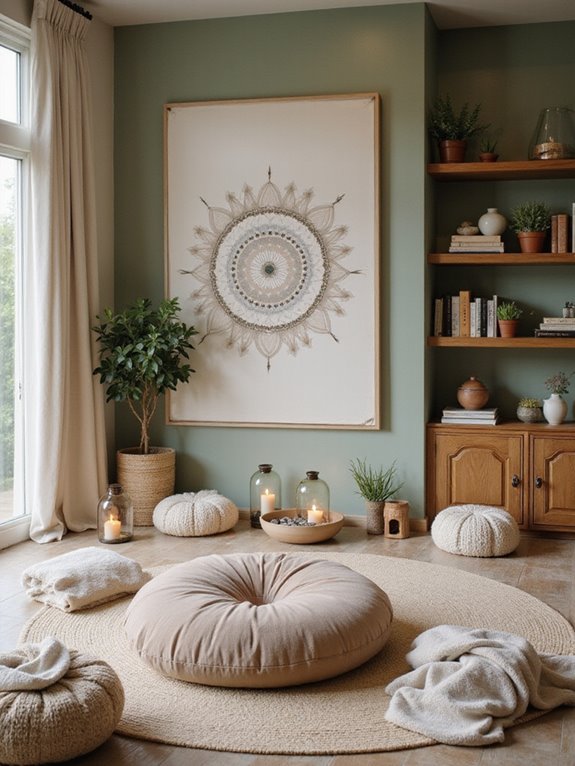
After establishing a cozy reading nook, you can enhance your healing room by designing a dedicated meditation space. First, choose a quiet corner where you won’t be disturbed, and consider adding cushions or a meditation bench for comfort. You might incorporate calming elements like a small water fountain or indoor plants to foster tranquility. Use soft colors—think serene blues or earthy greens—to promote a peaceful atmosphere. To make the most of your meditation practices, familiarize yourself with various meditation techniques, such as guided imagery or breath focus, which can deepen your practice. Regularly dedicating time here to mindfulness practices will transform this space into a sanctuary, allowing you to reconnect, reflect, and rejuvenate your spirit.
Use Soft Textiles and Fabrics
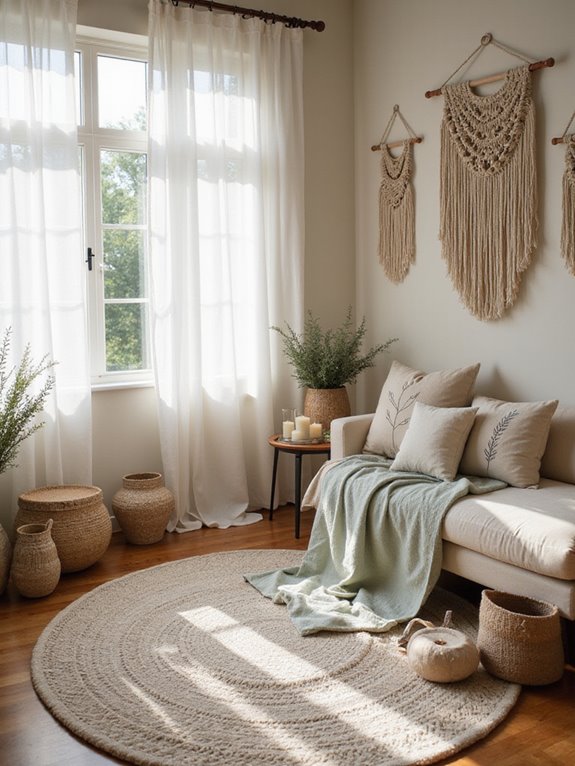
To transform your healing room into a truly calming sanctuary, it’s essential to contemplate the impact of soft textiles and fabrics. Start by layering various fabric textures, like velvety cushions, cotton throws, and linen drapes. These layers not only add depth but also evoke a soothing ambiance. Consider choosing muted colors or gentle patterns that promote relaxation. When selecting rugs, opt for plush options that invite you to sit or lie down comfortably. Hang lightweight, flowing curtains to diffuse natural light, creating a serene atmosphere. By incorporating these textile layers, you’re crafting a space that feels cozy and inviting, allowing you to unwind fully. Soft fabrics will wrap you in warmth, helping to enhance your healing journey at home.
Incorporate Soothing Sounds
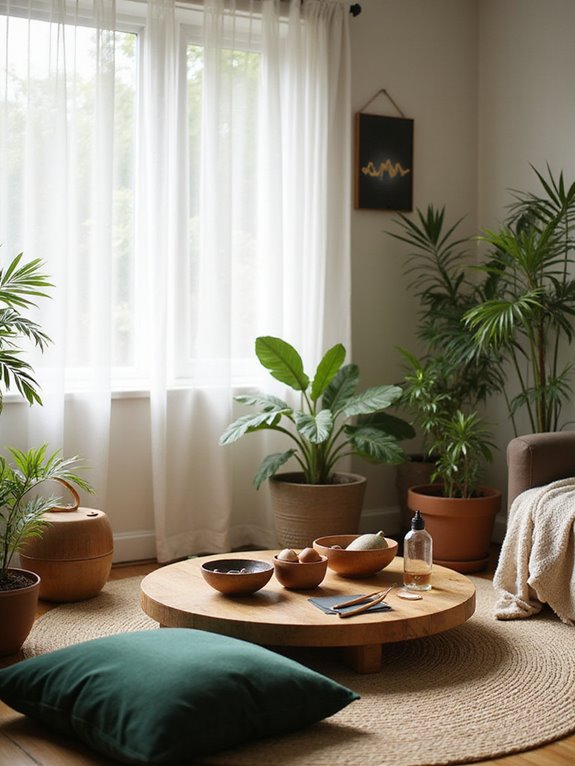
Building on the cozy atmosphere created by soft textiles and fabrics, incorporating soothing sounds can elevate your healing room into a true sanctuary. Consider using carefully curated soundscapes like gentle rain, ocean waves, or bird songs to promote relaxation. You could also create a playlist of ambient music that flows seamlessly, allowing your mind to drift without distractions. Using a Bluetooth speaker, you can fill the space with these calming sounds, helping to drown out any external noise. You might explore apps designed for relaxation, which offer various nature sounds and frequencies that can enhance your meditative practices. Ultimately, these soothing sounds can help you unwind, rejuvenate, and create a peaceful environment that nurtures your well-being.
Install Aromatherapy Elements
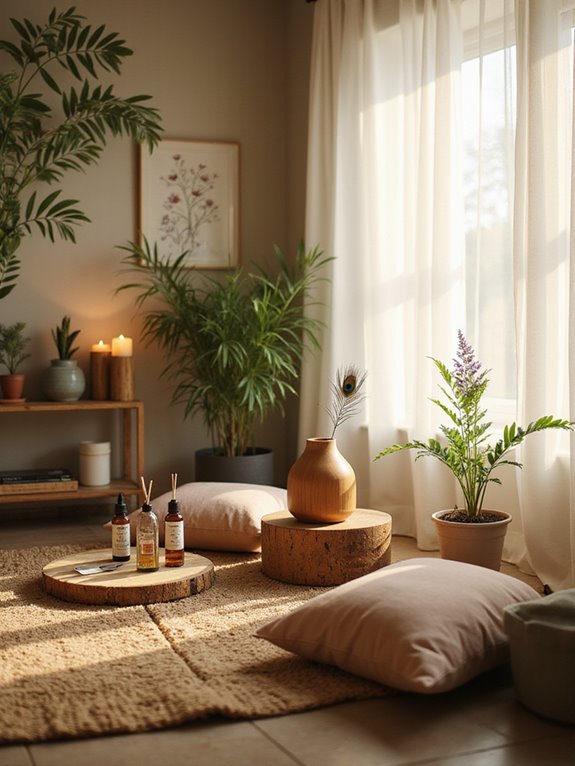
While you’re creating a calming sanctuary, installing aromatherapy elements can greatly enhance the ambiance and overall healing experience. Start by incorporating essential oils through scent diffusers, allowing therapeutic blends to fill the room with uplifting scents. You might also consider adding fragrance candles that offer both warmth and a soothing aroma. Calming sprays can be another excellent addition, providing a quick pick-me-up whenever you need it. Don’t forget about aromatic herbs, like lavender and chamomile, to engage your senses further. By practicing olfactory mindfulness, you can harness the power of scent memory to evoke peace and relaxation. Remember, these mood enhancers not only create sensory experiences but can also transform your space into a true sanctuary.
Include Artwork That Inspires
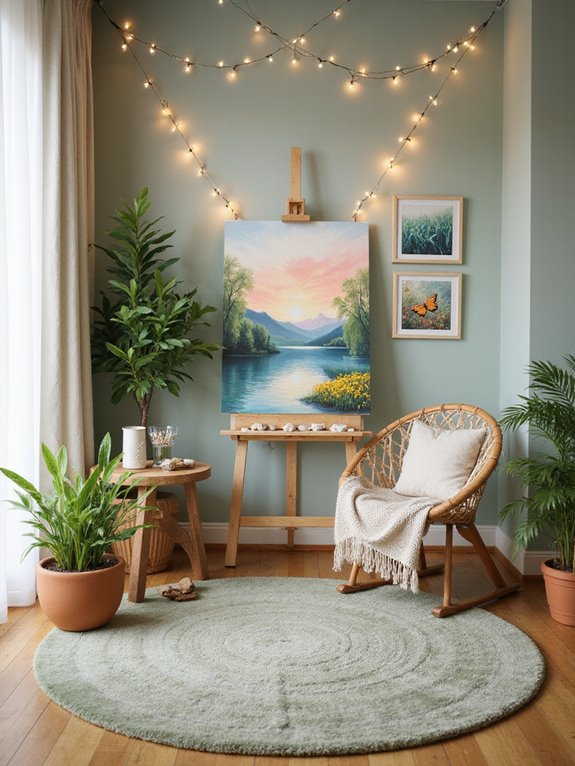
Incorporating artwork that inspires can greatly enrich the atmosphere of your healing room, offering positive energy and emotional uplift. Select pieces that resonate with you personally, whether it’s vibrant nature scenes or calming abstracts. Inspirational quotes displayed alongside these artworks can serve as daily reminders of your goals and aspirations, fueling motivation and positivity. Consider framing quotes in beautiful typography, pairing them with serene images of landscapes or botanical elements. This combination will not only beautify your space but also promote mindfulness and reflection. Make certain the colors complement your room’s palette, creating a harmonious look. By curating artwork that evokes peace and inspiration, you’ll foster a sanctuary that nurtures your well-being and encourages a calming state of mind.
Have a Dedicated Yoga Zone
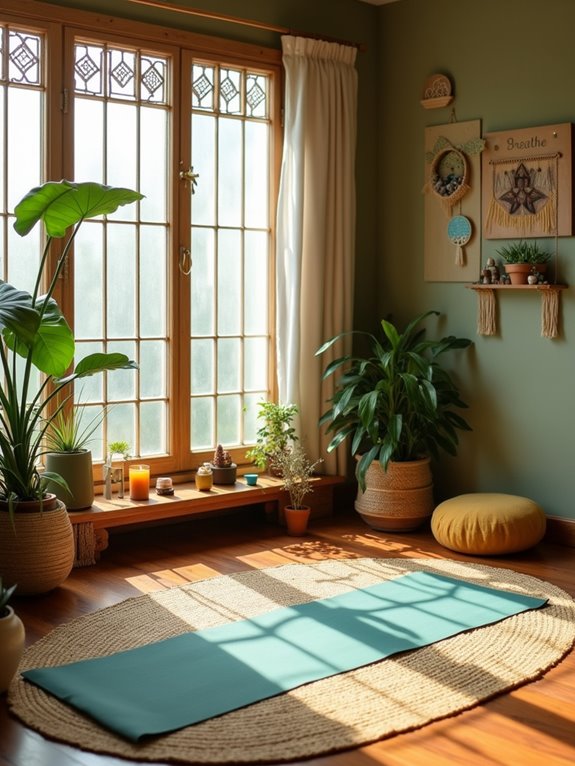
Creating a dedicated yoga zone in your healing room can transform your practice, allowing you to immerse yourself in mindfulness and relaxation. Start by designating a specific area with enough space for movement. Invest in quality yoga equipment, like mats, blocks, and straps, ensuring you have all you need to perform different poses comfortably. Add calming elements: soft lighting, soothing scents, or gentle music to enhance your experience. This environment will help you focus on your mindfulness practices, like meditation or breathwork, which promotes inner peace. Whenever you step into this tranquil space, you’re reminded to disconnect from daily stress and reconnect with yourself. Embrace this sanctuary, and watch your practice flourish through dedication and intention.
Use Minimalist Decor
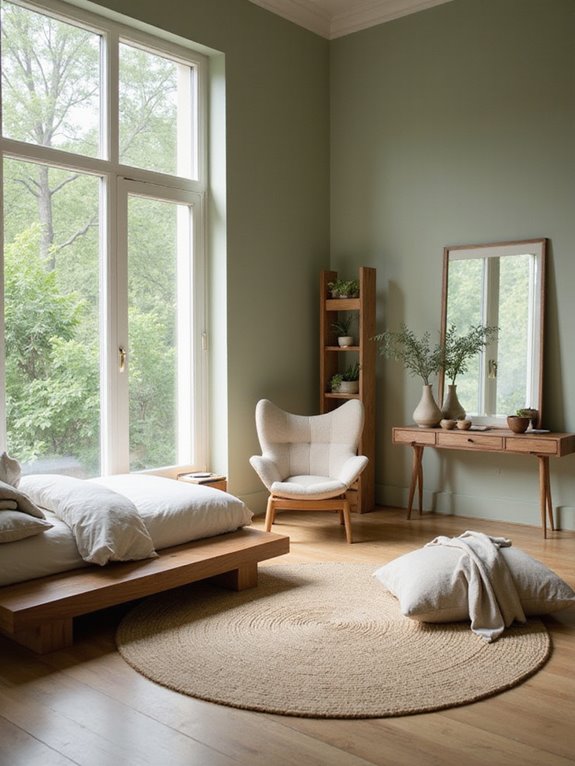
For a calming sanctuary, using minimalist decor can be a game-changer in your healing room. By incorporating minimalist furniture, you create an open space that encourages relaxation and peace. Choose simple, clean-lined pieces that feel light and unobtrusive, allowing your mind to unwind without distractions. Neutral colors, such as whites, soft beiges, or cool grays, can enhance this effect while promoting a serene atmosphere. When you limit the number of decorative items, you draw attention to what truly matters in your space, such as plants or meaningful art. Remember, less is more, so prioritize functionality and aesthetics equally. With intentional choices, you’ll cultivate a haven that inspires tranquility and rejuvenation, making each visit to your healing room a restorative experience.
Create a Personal Alter or Focus Point
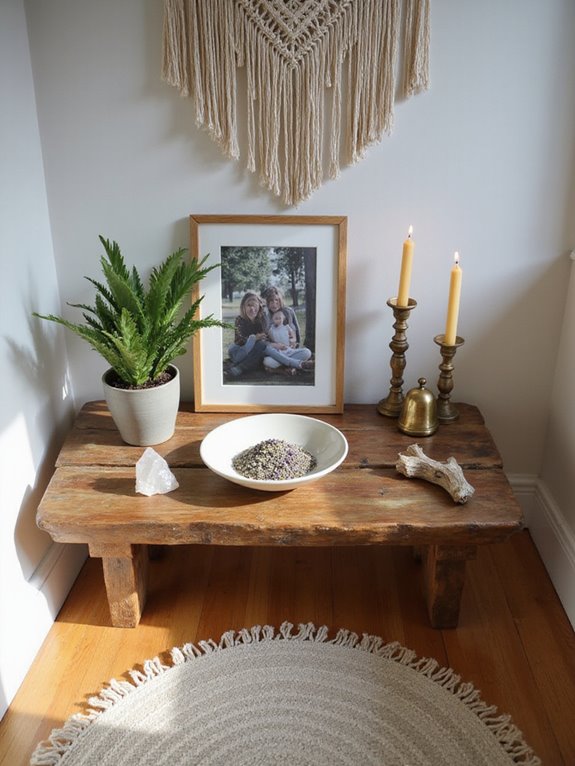
A personal altar or focus point can transform your healing room into a truly special retreat. This sacred space embodies altar symbolism, reflecting what’s meaningful to you—whether it’s crystals, candles, or meaningful photographs. Start by selecting a flat surface in your room, like a small table or shelf, and arrange your items intentionally. These elements can guide your personal rituals, helping you connect with your intentions or prayers. Consider including natural elements, like plants or stones, to bring a sense of grounding. Use your altar to inspire moments of reflection, meditation, or gratitude. By creating a focus point that resonates with your spirit, you invite tranquility and connection into your healing space, fostering a deeper sense of well-being.
Promote Mindfulness With Journals
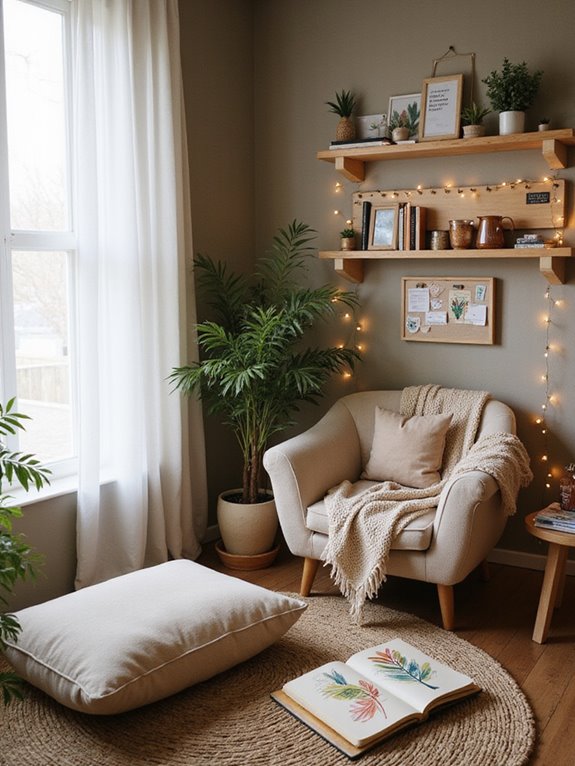
While you’re building your healing sanctuary, incorporating journals can greatly enhance your mindfulness practice and promote emotional clarity. Start with a gratitude journal, where you jot down three things you appreciate each day. This simple act encourages a positive mindset and cultivates joy. Next, create space for mindful reflection by documenting your thoughts and feelings. Writing about your experiences allows you to understand your emotions better and recognize patterns in your life. Set aside a few moments daily to engage in this practice; it’ll help quiet your mind and ground you. Consider using prompts to guide your entries, making the process feel effortless. By integrating journals into your sanctuary, you’ll foster a deeper connection to yourself and your healing journey.
Install Soft Lighting Options
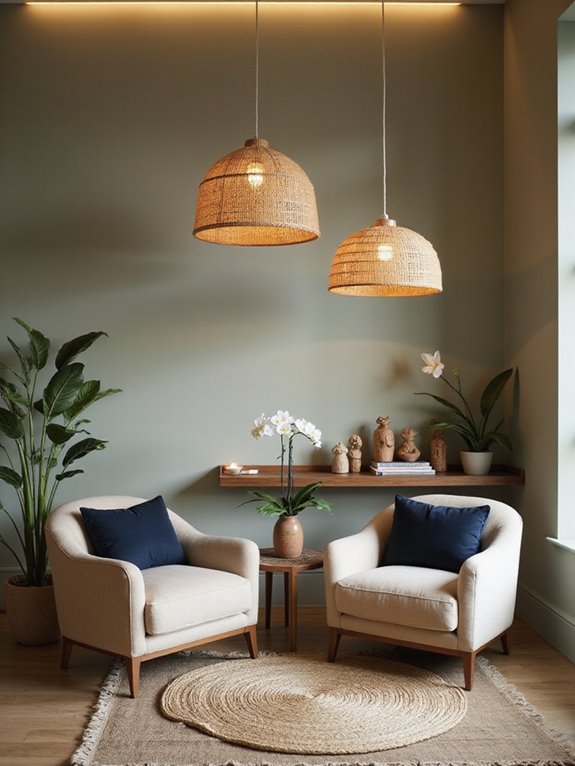
Soft lighting options can transform your healing room into a tranquil escape, promoting relaxation and a sense of calm. Start with LED lights that offer energy efficiency and adjustable brightness, allowing you to customize the ambiance. Incorporate dimmer switches to easily control the light intensity, creating soft hues that suit your mood. Ambient lamps and light fixtures with warm glow can add depth and warmth to the space, enhancing comfort. Consider adding string lights for a whimsical touch, or using battery-operated candles to create a soothing flicker. Pay attention to color temperature, opting for warmer tones that foster relaxation. By thoughtfully arranging your lighting, you’ll cultivate a serene atmosphere perfect for unwinding and self-care.
Conclusion
In creating your calming sanctuary, remember that each element contributes to your overall peace of mind. Studies show that spaces designed for relaxation can greatly reduce stress, boosting both mental and physical well-being. By thoughtfully selecting your location, lighting, colors, and furnishings, you’re not just decorating—you’re cultivating a healing environment. So, start transforming your space today, embrace these ideas, and let your home become a refuge of calm and tranquility that nurtures your spirit.


