


How to Use Baking Soda for Hydrangeas
To use baking soda for hydrangeas, start by improving your soil quality; mix one tablespoon of baking soda with one gallon of water, and apply it around the plants every couple of months. This helps with nutrient absorption and enhances soil texture. If you want blue blooms, lower the pH with sulfur, or raise it using lime for pink ones. Baking soda also works as a natural fungicide and pest deterrent. You’ll discover more effective techniques below.
Enhancing Soil Quality With Baking Soda

Enhancing the soil quality for your hydrangeas can lead to vibrant blooms and healthier plants, so why not consider using baking soda? When you mix it into your soil, you improve the soil texture, making it easier for roots to penetrate and access nutrients. Baking soda can also aid in nutrient absorption, allowing your plants to take in essential minerals more efficiently. Just mix a tablespoon of baking soda with a gallon of water and apply it to the soil around your hydrangeas every couple of months. This simple addition can create a more favorable environment for your plants. Remember, healthy soil means thriving hydrangeas, so don’t hesitate to incorporate this easy method into your gardening routine!
Adjusting Ph Levels for Colorful Blooms
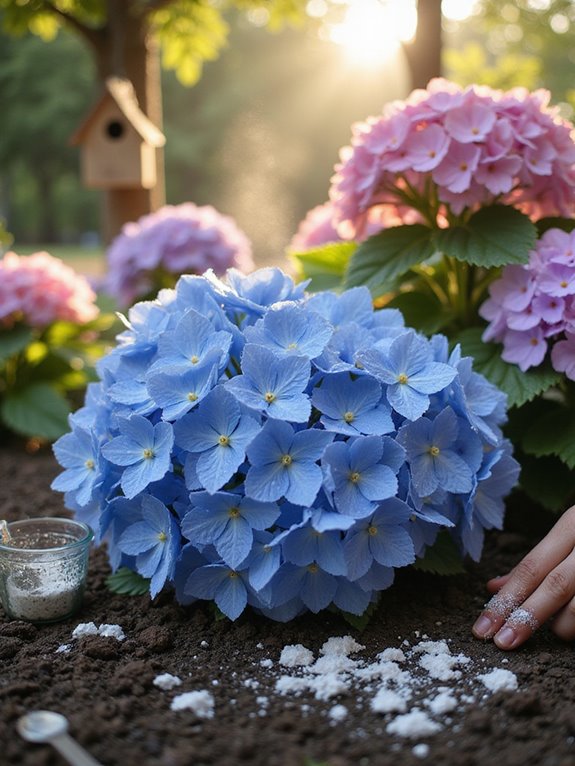
If you want to achieve those stunning blue or pink hues in your hydrangea blooms, adjusting the pH levels of your soil is essential. To achieve blue flowers, aim for more acidic soil with a pH between 5.0 and 5.5. You can lower the pH by adding soil amendments like sulfur or peat moss. On the other hand, if you prefer pink blooms, increase the pH to around 6.0 to 6.5 by using lime. Regularly test your soil’s pH using a simple testing kit, then adjust as needed. Remember, it may take time for the changes to reflect in your flowers, so be patient; your efforts will lead to those vibrant, colorful blooms you desire.
Baking Soda as a Natural Fungicide
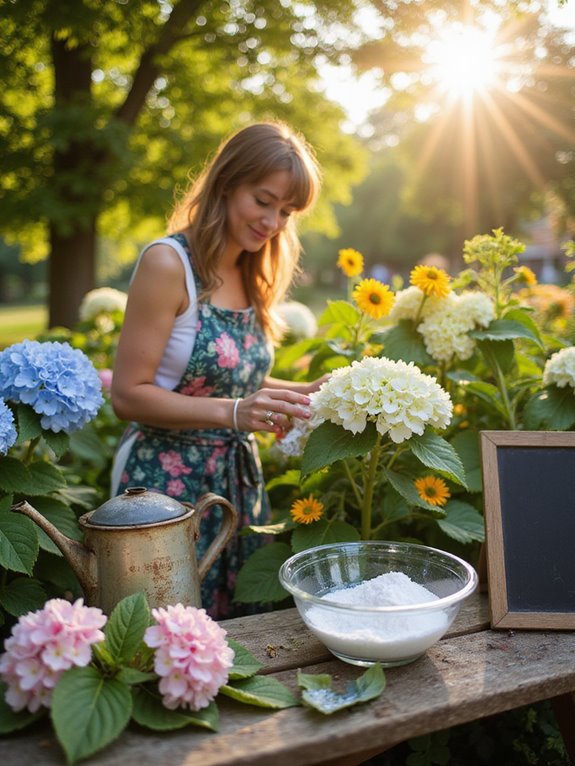
Maintaining the health of your hydrangeas means keeping a watchful eye on potential fungal threats. Using baking soda as a natural fungicide offers several benefits, including its ability to combat powdery mildew and other common fungal issues. For effective application methods, mix one tablespoon of baking soda with a gallon of water and a few drops of liquid soap—this allows the solution to adhere better to plant surfaces. Spray this mixture directly onto the affected areas, ensuring thorough coverage of leaves and stems. Repeat every week until you see improvement. By adopting this simple, eco-friendly technique, you can protect your hydrangeas, encouraging robust growth and vibrant blooms while minimizing chemical usage in your garden.
Combating Common Pests With Baking Soda
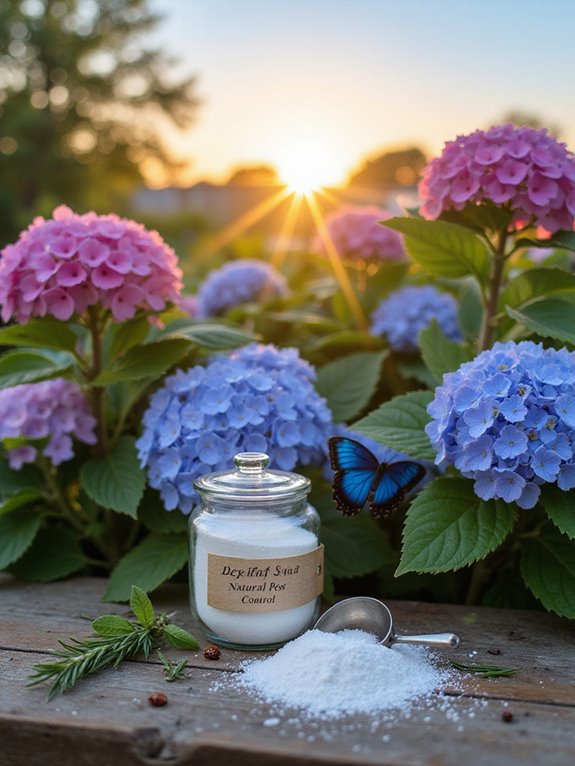
Many gardeners face the challenge of dealing with pests that can threaten the beauty and health of their hydrangeas. One effective strategy is using baking soda mixtures as pest deterrence strategies. To create a simple mixture, dissolve two tablespoons of baking soda in a gallon of water, and add a few drops of liquid soap to help it adhere to the leaves. Spray this solution on affected areas to deter pests like aphids and spider mites. Be sure to apply during cooler parts of the day to prevent leaf damage from the sun. Regularly check your plants and reapply after rain, making this natural approach a sustainable way to protect your hydrangeas without harsh chemicals.
Promoting Healthy Root Development
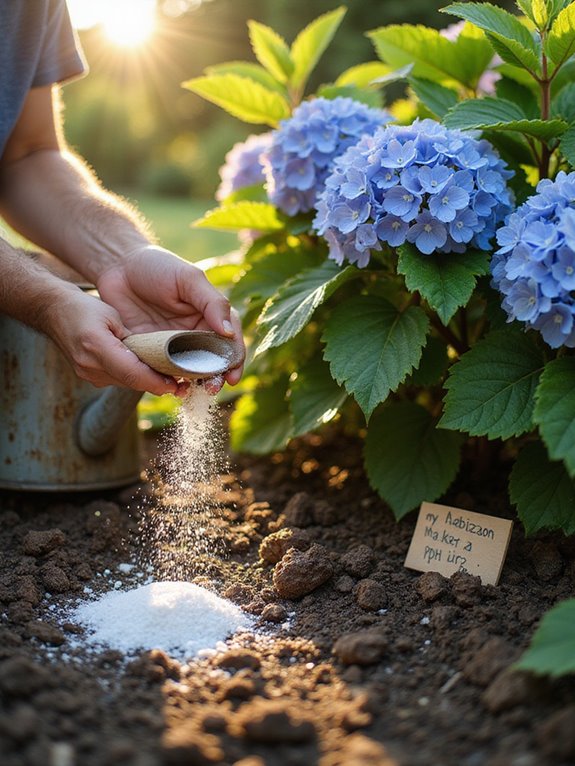
While you nurture your hydrangeas above ground, don’t forget that robust root development is vital for their overall health and vibrancy. To promote healthy roots, consider these effective strategies:
- Guarantee proper root aeration by loosening the soil.
- Add organic compost to improve soil structure.
- Maintain good moisture retention through regular watering.
- Mulch around the base to regulate temperature and reduce evaporation.
- Use baking soda sparingly; it can help create an ideal pH level.
Using Baking Soda in Fertilizer Mixes
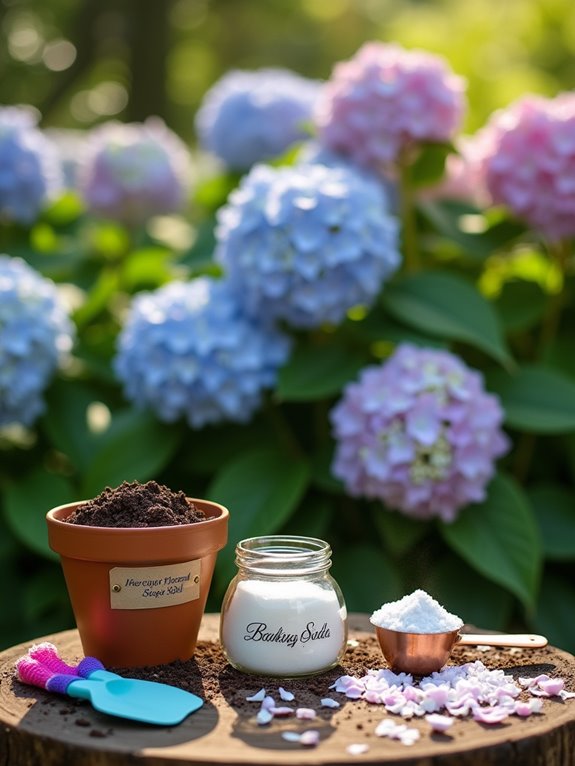
Using baking soda in your fertilizer mixes can be a game-changer for hydrangeas, especially if you’re looking to balance soil pH and boost overall plant health. When mixed into your fertilizer, baking soda helps create a more favorable environment for nutrient absorption. For the best results, focus on adjusting your fertilizer ratios—consider a mix that includes equal parts nitrogen, phosphorus, and potassium while adding a teaspoon of baking soda per gallon of water. This blend promotes a healthy nutrient balance, which is essential for your hydrangeas’ growth and vibrancy. Experiment with small amounts at first, and watch how your plants respond. You’ll be amazed at how this simple ingredient can enhance their blooming potential!
Tips for Applying Baking Soda to Hydrangeas
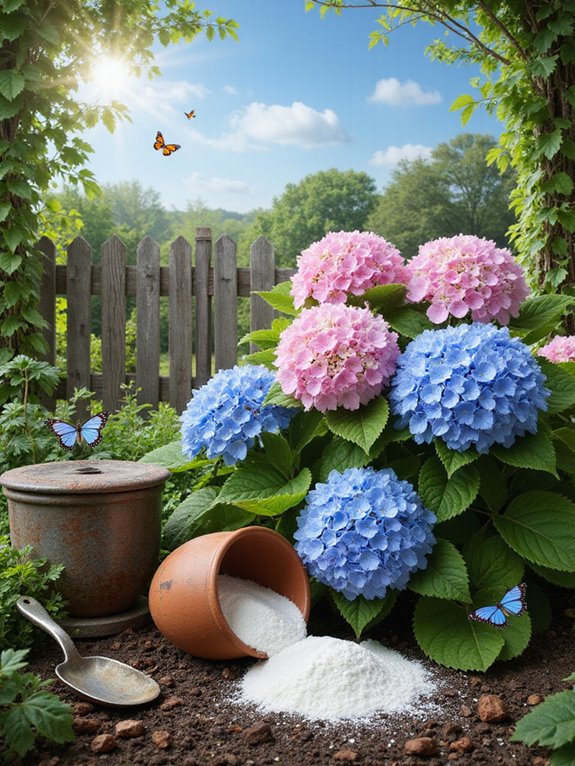
To guarantee your hydrangeas thrive, applying baking soda thoughtfully can make a significant difference in their growth and blooming potential. Here are some tips to enhance your hydrangea health with baking soda mixtures:
- Mix with Water: Combine one tablespoon of baking soda with a gallon of water to create a nourishing solution.
- Check Soil pH: Test your soil’s acidity to determine the right amount of baking soda to use.
- Apply Sparingly: Limit applications to once a month to avoid overwhelming your plants.
- Water After Application: Make sure your hydrangeas are well-watered before applying the mixture to prevent shock.
- Observe Changes: Keep an eye on how your hydrangeas respond, adjusting your approach as needed.
Conclusion
Using baking soda can transform your hydrangeas into vibrant, healthy plants. By enhancing soil quality, adjusting pH levels, and controlling pests, you’re setting your blooms up for success. Isn’t it exciting to think about the colorful garden you can create? With just a bit of baking soda mixed into your care routine, you can promote strong growth and dazzling flowers. So, get started today, and watch your hydrangeas thrive like never before!


